
 English
 اللغة العربية
  Bahasa Indonesia
  Bahasa Melayu
  ภาษาไทย
  Tiếng Việt
  简体中文
简体中文 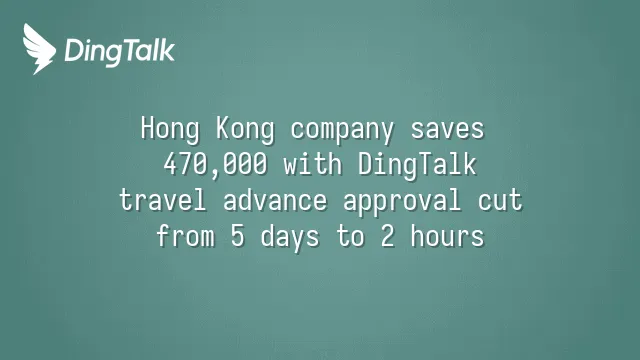
Why Traditional Models Slow Down Business
Manually processing employee travel advances takes an average of 5.2 days—not just a time loss, but for project-driven SMEs, delays mean rising startup costs, missed client commitments, and lost market opportunities. According to the Hong Kong Institute of Certified Public Accountants’ 2024 survey, 78% of surveyed companies had been forced to postpone project execution due to slow financial approvals, directly impacting cash flow and team morale.
The hidden costs are even more staggering: each application requires 1.8 hours of cross-departmental verification and compliance checks, cumulatively accounting for over 18% of total travel management expenses. Invoice discrepancies or exchange rate errors caused by manual handling can trigger audit disputes, turning compliance from protection into burden.
The real shift lies in mindset upgrade: travel advances should not be seen as financial liabilities, but as strategic tools enabling rapid business response. While you're still exchanging emails, your competitors have already achieved "apply-and-decide" immediacy.
Seamless Integration of Approval and Financial Systems
DingTalk doesn't replace systems—it connects them. By using standard APIs to integrate OA approval workflows with ERP and banking payment gateways, it enables end-to-end automation of the "application–review–disbursement" process. This technical architecture compresses processing cycles from three days to under two hours, eliminating redundant data entry, cross-system checks, and waits for manual confirmation.
- Automated Multi-Level Approval Triggers: When a regional manager submits an application, the system instantly routes it to the appropriate supervisors based on predefined rules, while simultaneously verifying budget availability in relevant accounting codes.
- Real-Time Payment Instruction Generation: Upon approval, payment instructions are automatically sent to designated banks, removing human error and compliance disputes.
- Low-Code Configuration Capability: IT teams can complete system integration within 48 hours—no external developers or prolonged downtime required—meaning businesses gain near-custom solution flexibility at minimal cost.
This integration is not just about speed; it marks a critical leap that transforms financial control from passive record-keeping to proactive risk alerting.
Quantifying the Financial Value of Automation
After deploying DingTalk, enterprises save an average of HK$470,000 annually in administrative costs, with return on investment realized in under seven months—results validated across finance, logistics, and education sectors. Under paper-based processes, the cost per advance was as high as HK$320; automation reduces this to HK$95, a nearly 70% drop. For a mid-sized company processing 1,500 applications per year, this frees up almost half a million in working capital and over 2,000 labor hours.
Savings stem from three transformations:
First, going paperless eliminates printing, filing, and mailing expenses;
Second, automated routing shortens average approval time from 5.8 days to 1.2 days, reducing employee out-of-pocket pressure and risks of late penalties;
More importantly, built-in budget controls block abnormal requests at submission, cutting post-event audit workload.
According to the 2024 Asia-Pacific Financial Operations Benchmark Study, this level of automation reduces expense compliance violations by 63% and cuts internal audit preparation time by over 40%. A finance manager at a multinational logistics firm noted: 'We used to spend three days every month reconciling travel accounts. Now, we use that saved time analyzing supplier cost structures and found optimization opportunities saving HK$180,000 annually.'
Smart Rules Strengthen Compliance Defenses
Only when compliance is embedded into workflows can companies truly take control of risk. DingTalk’s conditional workflow engine transforms static policies into dynamic control points, making compliance not a post-approval fix, but an automatic frontline defense—every request follows configurable rules by design.
For example, after a Hong Kong-listed retail group implemented a rule requiring dual approval from both finance and department heads for any single advance exceeding HK$10,000, the system automatically intercepted non-compliant submissions, reducing violation rates by 91% within one quarter. More critically, every approval generates immutable timestamps and permission trails, fully aligning with Section 403 of Hong Kong’s Companies Ordinance and significantly lowering the risk of external audit adjustments.
The deeper value of this mechanism is shifting financial control from “post-event accountability” to “pre-event prevention.” Managers gain real-time visibility into cash flow pressure points and can flexibly adjust thresholds according to business dynamics, transforming compliance from reactive obligation into proactive asset.
Five Steps to Implement the Automation Engine
Turning smart rules into tangible benefits hinges on systematic deployment. DingTalk achieves measurable efficiency gains through five steps: requirement assessment → process mapping → permission design → testing and launch → staff training. A minimum viable product (MVP) can be validated within two weeks, immediately demonstrating automation value.
The key to overcoming common delays is “starting from templates”: DingTalk’s built-in form library allows direct adoption and customization according to local reimbursement standards, drastically shortening development time. More importantly, integrating DingTalk attendance data with business trip durations enables automatic period filling based on clock-in records—reducing manual input errors and improving expense calculation accuracy by over 40% (based on the 2025 Asia-Pacific SaaS Adoption Report).
A Hong Kong cross-border e-commerce company applied this framework and reduced its approval cycle from 5.8 days to 1.7 days, with compliance exceptions down by 63%. Its success stemmed from “running core scenarios first”—focusing initially on domestic trips by the sales team as the MVP scope, quickly gathering feedback before scaling company-wide.
The true benefit loop lies here: process automation isn’t just about saving time—it builds the data foundation for continuous improvement. Each application enhances the system’s ability to learn risk patterns, transforming compliance from passive review to active prevention.
We dedicated to serving clients with professional DingTalk solutions. If you'd like to learn more about DingTalk platform applications, feel free to contact our online customer service or email at
Using DingTalk: Before & After
Before
- × Team Chaos: Team members are all busy with their own tasks, standards are inconsistent, and the more communication there is, the more chaotic things become, leading to decreased motivation.
- × Info Silos: Important information is scattered across WhatsApp/group chats, emails, Excel spreadsheets, and numerous apps, often resulting in lost, missed, or misdirected messages.
- × Manual Workflow: Tasks are still handled manually: approvals, scheduling, repair requests, store visits, and reports are all slow, hindering frontline responsiveness.
- × Admin Burden: Clocking in, leave requests, overtime, and payroll are handled in different systems or calculated using spreadsheets, leading to time-consuming statistics and errors.
After
- ✓ Unified Platform: By using a unified platform to bring people and tasks together, communication flows smoothly, collaboration improves, and turnover rates are more easily reduced.
- ✓ Official Channel: Information has an "official channel": whoever is entitled to see it can see it, it can be tracked and reviewed, and there's no fear of messages being skipped.
- ✓ Digital Agility: Processes run online: approvals are faster, tasks are clearer, and store/on-site feedback is more timely, directly improving overall efficiency.
- ✓ Automated HR: Clocking in, leave requests, and overtime are automatically summarized, and attendance reports can be exported with one click for easy payroll calculation.
Operate smarter, spend less
Streamline ops, reduce costs, and keep HQ and frontline in sync—all in one platform.
9.5x
Operational efficiency
72%
Cost savings
35%
Faster team syncs
Want to a Free Trial? Please book our Demo meeting with our AI specilist as below link:
https://www.dingtalk-global.com/contact
