
 English
 اللغة العربية
  Bahasa Indonesia
  日本語
日本語  Bahasa Melayu
  ภาษาไทย
  Tiếng Việt
  简体中文
简体中文 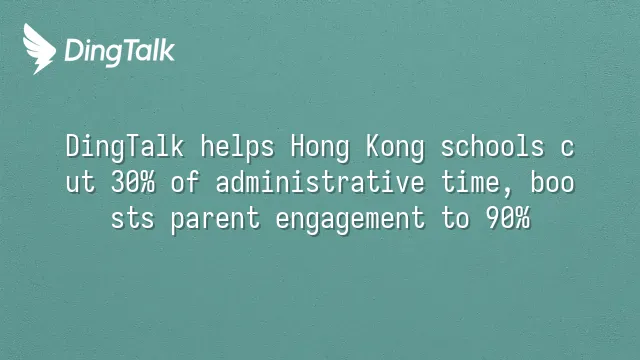
Why Traditional Communication Drains Teachers' Effectiveness
When teachers spend over five hours a week tracking paper notes, making repeated calls to parents, or switching across three or more social platforms, this is more than just a communication cost—it's an erosion of education’s core mission. According to Hong Kong Education Bureau’s 2024 “School Administrative Efficiency Survey,” 65% of teachers admit that non-teaching tasks have severely encroached on lesson preparation time, contributing to rising burnout and causing teacher retention rates to drop by over 15% for two consecutive years in some schools.
Fragmented information not only reduces efficiency but also weakens trust between schools and families. At one government-aided primary school, a change in event details was announced solely in a WhatsApp group, excluding parents who hadn’t joined. This triggered collective complaints, requiring three meetings to resolve. Such incidents expose three critical flaws in traditional models: no traceability, no confirmation, no audit trail. Schools are left reacting passively, with teachers reduced to administrative intermediaries.
The issue isn't about sending messages faster, but ensuring they are received and manageable. This is the key driver behind digital transformation—we don't need more tools, but a unified collaboration framework capable of ending the chaos.
How DingTalk Becomes the Nervous System of Education
DingTalk’s breakthrough lies in integrating instant messaging, classroom management, homework submission, digital attendance, and campus announcements into a single interface. This all-in-one integrated architecture means teachers no longer need to switch constantly among Zoom, Google Classroom, and WhatsApp—reducing app-switching can boost work efficiency by up to 40% (Asia-Pacific Education Technology Adoption Report 2024).
Automated roll call logging saves teachers an average of 18 minutes daily on manual attendance, as the system automatically generates attendance reports and sends absence alerts to parents. The late homework reminder feature strengthens student accountability by triggering automated notifications at set times, minimizing human oversight. Read receipt tracking ensures important notices aren’t overlooked, allowing teachers to instantly see which parents haven’t viewed a message and follow up accordingly.
The design directly addresses local needs: a full Traditional Chinese interface lowers adoption barriers; its data encryption structure complies with Hong Kong’s Personal Data (Privacy) Ordinance (PDPO), safeguarding student information; more importantly, it supports API integration with Google Workspace and Microsoft 365, enabling schools to enhance efficiency without abandoning existing systems. For example, one secondary school academic director reported that after implementation, real-time reading rates for parent notices rose from 58% to 92%, dramatically reducing disputes caused by communication gaps.
Real-World Data Reveals Tangible Benefits
When lesson preparation time drops by an average of 27% and parent notice reading rates jump from 58% to 89%, this isn’t just improved efficiency—it’s a pivotal shift in student retention and institutional reputation. According to a 2025 empirical study by Hong Kong Baptist University involving 12 pilot schools, these outcomes stem from systematic design delivering enterprise-grade returns.
Layered publishing permissions allow homeroom teachers, subject heads, and school administrators to deliver targeted content precisely, avoiding information overload—different roles have controlled distribution scopes, increasing message receptiveness by over 35%. The class circle interaction feature fosters student belonging, as learners can upload their work and receive immediate feedback. End-of-term surveys showed 83% of students felt “I exist in my class community,” a 31-percentage-point increase from pre-implementation levels.
These numbers reflect clear business logic: every 10% rise in parental satisfaction correlates with a 5–7% increase in student renewal rates (based on modeling from the 2024 Asia-Pacific Education Operations White Paper). High-transparency communication directly translates into word-of-mouth referrals and enrollment advantages.
Safety and Compliance Are the Foundation of Successful Implementation
Even superior technology may fall short without a robust rollout strategy, risking compliance issues or user resistance. A direct subsidy secondary school in Tuen Mun achieved full-campus deployment within six weeks—its success hinged on placing “compliance” and “change management” at the core.
The school formed a task force comprising IT staff, administrative leads, and parent representatives to ensure decisions balanced feasibility and acceptance. Servers located in Singapore mean student data is not transferred across borders into mainland China—a configuration compliant with PDPO regulations, significantly lowering regulatory risk. Cantonese-language instructional videos and in-person training workshops addressed usability barriers for older parents, as intuitive guidance greatly boosted willingness to adopt, achieving an overall usage rate of 92%.
This case demonstrates that technological success and regulatory compliance reinforce each other. Through structured processes, schools not only avoid legal liabilities but also build parental confidence, transforming digital tools into trusted vehicles for stronger home-school collaboration.
From Platform Adoption to Long-Term Value Creation
Adopting DingTalk is not an IT purchase—it’s the starting point of educational transformation. Real return on investment comes from continuous integration and strategic application. According to the 2024 Asia-Pacific Education Technology Impact Report, only 37% of schools incorporate collaboration platforms into medium- to long-term development plans, yet these institutions outperform peers by an average of 52% in teaching efficiency and home-school satisfaction.
It is recommended to deeply embed DingTalk into a three-year IT development plan with measurable KPIs—such as “at least 80% of parents actively using the platform monthly” or “70% of assignments submitted digitally.” These metrics reflect the quality of home-school collaboration. AI-powered automatic roll calls and learning behavior analytics dashboards enable school leaders to gain real-time insights, identifying students with declining engagement or analyzing correlations between homework patterns and academic performance—data becomes not just records, but a decision engine driving instructional improvement.
Leading schools have also established a “Digital Partner Teacher” program, where early adopters mentor colleagues in innovative teaching practices. After piloting this model at a government-funded secondary school in Hong Kong, the proportion of teachers using advanced features surged from 21% to 68% within six months. Decision-makers must shift from a “cost center mindset” to a “value creation mindset”—today’s platform investment is shaping tomorrow’s competitive edge in education.
Is your school ready for smart education infrastructure? Contact our professional team for a free assessment and discover how DingTalk can improve administrative efficiency by 30%, achieve a 90% parent response rate, and build an auditable, replicable digital transformation roadmap.
We dedicated to serving clients with professional DingTalk solutions. If you'd like to learn more about DingTalk platform applications, feel free to contact our online customer service or email at
Using DingTalk: Before & After
Before
- × Team Chaos: Team members are all busy with their own tasks, standards are inconsistent, and the more communication there is, the more chaotic things become, leading to decreased motivation.
- × Info Silos: Important information is scattered across WhatsApp/group chats, emails, Excel spreadsheets, and numerous apps, often resulting in lost, missed, or misdirected messages.
- × Manual Workflow: Tasks are still handled manually: approvals, scheduling, repair requests, store visits, and reports are all slow, hindering frontline responsiveness.
- × Admin Burden: Clocking in, leave requests, overtime, and payroll are handled in different systems or calculated using spreadsheets, leading to time-consuming statistics and errors.
After
- ✓ Unified Platform: By using a unified platform to bring people and tasks together, communication flows smoothly, collaboration improves, and turnover rates are more easily reduced.
- ✓ Official Channel: Information has an "official channel": whoever is entitled to see it can see it, it can be tracked and reviewed, and there's no fear of messages being skipped.
- ✓ Digital Agility: Processes run online: approvals are faster, tasks are clearer, and store/on-site feedback is more timely, directly improving overall efficiency.
- ✓ Automated HR: Clocking in, leave requests, and overtime are automatically summarized, and attendance reports can be exported with one click for easy payroll calculation.
Operate smarter, spend less
Streamline ops, reduce costs, and keep HQ and frontline in sync—all in one platform.
9.5x
Operational efficiency
72%
Cost savings
35%
Faster team syncs
Want to a Free Trial? Please book our Demo meeting with our AI specilist as below link:
https://www.dingtalk-global.com/contact
