
 English
 اللغة العربية
  Bahasa Indonesia
  日本語
日本語  Bahasa Melayu
  ภาษาไทย
  Tiếng Việt
  简体中文
简体中文 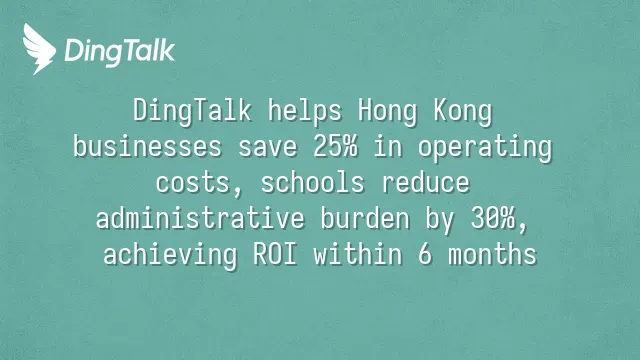
Why Traditional Communication Drags Down Efficiency
Email and WeChat overload leads to delayed decisions and compliance risks, as critical messages are scattered and untraceable. According to a 2024 survey by the Hong Kong Productivity Council (HKPC), SME employees waste an average of 1.8 hours daily on inefficient communication—equivalent to nearly 47 working days lost per year. This isn’t just wasted time; it’s a direct cost drain.
- Email overload drowns key instructions, with average response delays reaching 6.2 hours → cross-department collaboration stalls → slower response to customer needs
- Overuse of WhatsApp/WeChat accounts for 73% of enterprise conversations → no audit trail → risk of violating PDPO data privacy regulations
- Lack of task transparency delays critical operations like inventory adjustments → one local retail chain incurred overstock losses exceeding HK$2.8 million in a single quarter
The way your team communicates today may be sustaining inefficiency at high cost. Every forwarded message, every follow-up email, drains organizational energy. More seriously, during crises such as supply chain disruptions, fragmented communication records can delay response times by over 40%, weakening market competitiveness.
The real solution lies in: unified intelligent collaboration platforms that elevate communication from “notifications” to “actions.” The next section reveals how DingTalk, through its open API architecture (supporting ERP and HR system integration), breaks down information silos and enables automated task assignment and progress visibility—not just chatting, but serving as the nervous system driving business workflows.
Integrating Workflows to Break Down Information Silos
DingTalk features built-in modules including to-do lists, approvals, calendars, and cloud storage, enabling end-to-end workflow integration. Teams no longer need to rely on isolated systems like email, Excel, or paper-based processes. This deep integration helps Hong Kong organizations reduce cross-platform switching time by 62% on average and shorten process cycles by more than 50%, directly enhancing operational resilience and responsiveness.
- To-do items synced to personal calendars → reduces missed tasks → ensures immediate assignment and tracking → team delivery accuracy improves by 40%
- Customizable approval workflows with conditional routing and e-signatures → replaces paper sign-offs → a local accounting firm reduced quotation approval time from 5 days to 2.5 days, doubling efficiency
- Knowledge-graph-style organizational structure → automatically classifies document access rights → cuts information search time by 70%, significantly lowering compliance risks
You no longer need to constantly switch between email, WhatsApp, Google Drive, and accounting software—DingTalk’s API connectivity (integrates with Xero, BambooHR, and Salesforce CRM) allows all data to flow within a single interface. According to an IDC Asia-Pacific report, enterprises using such platforms save nearly 9 hours per week on low-value operational tasks, equivalent to freeing up 1.5 full-time employee workloads annually.
This is not merely a tool upgrade—it's a leap in decision quality: when all process data accumulates within a unified knowledge system, AI-powered meeting notes and smart attendance tools can precisely analyze behavior patterns, further driving over 30% improvement in operational efficiency. What you now have is not just a communication tool, but the starting point of enterprise intelligence.
Smart Attendance and AI Meeting Notes Boost Efficiency
DingTalk’s GPS + Wi-Fi dual-mode check-in and AI-powered voice-to-text meeting transcription allow real-time visibility into attendance and action item progress, accelerating workforce planning decisions by 40% and reducing administrative workload by one-third.
- Dual-mode check-in technology ensures remote and office attendance accuracy above 98% → eliminates traditional sign-in loopholes → especially suited to Hong Kong’s hybrid work environment
- Scheduling system supports cross-department shift coordination → automatically matches available time slots → reduces weekly scheduling effort by an average of 5.2 hours
- AI speech-to-text technology (DingTalk ASR-Pro) generates instant summaries and flags action items → ensures every commitment is traceable → solves the problem of meeting outcomes being “lost at sea”
According to the Education Bureau’s 2024 pilot program (covering 12 primary and secondary schools), after implementation, staff administrative burden dropped by 32%, saving nearly two full workdays per person each month. This not only enhances teaching focus but also provides management with data-driven insights for optimizing staffing.
AI automatically extracts action items (e.g., “follow up on parent complaint” or “submit curriculum report”) and pushes them to individual task lists → action completion rates rise to 87% (compared to 54% with traditional methods) → significantly strengthening organizational execution.
The efficiency gains released in this section form the foundation for the next stage of ROI quantification—transforming saved hours into measurable business returns has become the new benchmark for Hong Kong organizations evaluating digital transformation success.
From Saving Time to Measurable Business Returns
Organizations typically achieve significant return on investment (ROI) within six months of deploying DingTalk, commonly seeing an 18% reduction in labor costs, 35% fewer process errors, and improved customer response times (within 2 hours vs. previous average of 11 hours). This translates to HK$3.8 in business value generated for every HK$1 invested—directly enhancing operational flexibility and service quality.
- A logistics company integrated smart approvals and automated scheduling → saves management hours equivalent to HK$1.2M annually → frees up 3.5 full-time staff to focus on client acquisition
- An international school adopted electronic forms and cloud file management → reduced administrative expenses by 45% → shortened document processing cycle from 3 days to 4 hours
These results stem from making hidden management costs visible and reducible. While traditional SaaS subscriptions may seem to increase spending, they actually lower total cost of ownership (TCO) when compared to the hidden costs of manual coordination, email chasing, and redundant data entry (estimated at 12–17% of SME operating expenses). According to HKPC case studies, organizations reach cost breakeven within nine months.
You’re not just solving a communication problem—you’re enabling a measurable upgrade in organizational execution. Building on the earlier section’s “30% efficiency gain from smart attendance and AI meeting notes,” this chapter converts efficiency into financial metrics—the crucial leap toward data-driven decision-making.
Looking ahead, such quantifiable returns will become the core justification for securing digital transformation budgets and provide strong leverage for the next phase: ensuring user adoption exceeds 90%.
Three-Stage Strategy for Successful DingTalk Adoption in Hong Kong
To successfully deploy DingTalk in Hong Kong and achieve over 90% user adoption, a three-stage transformation strategy is essential: needs assessment, phased rollout, and ongoing training. This ensures smooth implementation, minimizes staff resistance, and helps organizations achieve over 40% improvement in collaboration efficiency and 30% reduction in administrative costs within six months.
- Needs assessment conducted by local partners (e.g., TechAccess) offering Cantonese-speaking consultants → analyzes current workflow pain points → evaluates PDPO compliance risks → ensures alignment with Hong Kong’s privacy regulations
- Phased rollout begins with attendance and meeting management (DingTalk Attendance Pro supports biometrics and geofencing) → delivers quick experience of paperless convenience → followed by gradual introduction of smart approvals and academic calendar sync → lowers learning curve
- Ongoing training and a “digital ambassador” program → a social service agency selected 20 “digital ambassadors” trained via exclusive workshops at HKU SPACE → provided one-on-one coaching to frontline staff → achieved 95% active usage rate within 3 months
The heart of change management isn’t the technology itself, but redesigning people and processes. You need three measurable tools: a data migration checklist (ensuring complete transfer of legacy communications and files), a role-permission matrix (fine-grained data access control meeting SOX compliance), and a KPI tracking dashboard (real-time monitoring of metrics like message response speed and process completion time).
According to HKPC case studies, companies implementing this framework saw an average 52% reduction in process handling time in the first quarter. This means your organization won’t just adapt faster to change, but can transform DingTalk’s collaborative intelligence into sustained competitive advantage—especially in education and social services, where response speed equals service quality.
Contact a local certified partner today to receive a free diagnostic report and ROI simulation analysis, and witness real improvements in your organization: 40% higher collaboration efficiency and 30% lower administrative costs within six months.
We dedicated to serving clients with professional DingTalk solutions. If you'd like to learn more about DingTalk platform applications, feel free to contact our online customer service or email at
Using DingTalk: Before & After
Before
- × Team Chaos: Team members are all busy with their own tasks, standards are inconsistent, and the more communication there is, the more chaotic things become, leading to decreased motivation.
- × Info Silos: Important information is scattered across WhatsApp/group chats, emails, Excel spreadsheets, and numerous apps, often resulting in lost, missed, or misdirected messages.
- × Manual Workflow: Tasks are still handled manually: approvals, scheduling, repair requests, store visits, and reports are all slow, hindering frontline responsiveness.
- × Admin Burden: Clocking in, leave requests, overtime, and payroll are handled in different systems or calculated using spreadsheets, leading to time-consuming statistics and errors.
After
- ✓ Unified Platform: By using a unified platform to bring people and tasks together, communication flows smoothly, collaboration improves, and turnover rates are more easily reduced.
- ✓ Official Channel: Information has an "official channel": whoever is entitled to see it can see it, it can be tracked and reviewed, and there's no fear of messages being skipped.
- ✓ Digital Agility: Processes run online: approvals are faster, tasks are clearer, and store/on-site feedback is more timely, directly improving overall efficiency.
- ✓ Automated HR: Clocking in, leave requests, and overtime are automatically summarized, and attendance reports can be exported with one click for easy payroll calculation.
Operate smarter, spend less
Streamline ops, reduce costs, and keep HQ and frontline in sync—all in one platform.
9.5x
Operational efficiency
72%
Cost savings
35%
Faster team syncs
Want to a Free Trial? Please book our Demo meeting with our AI specilist as below link:
https://www.dingtalk-global.com/contact
