
 English
 اللغة العربية
  Bahasa Indonesia
  日本語
日本語  Bahasa Melayu
  ภาษาไทย
  Tiếng Việt
  简体中文
简体中文 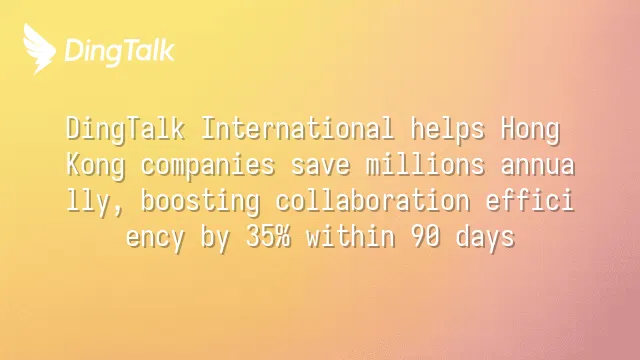
Why Collaboration Pain Points Are Escalating for Hong Kong Businesses
The digital collaboration challenges faced by Hong Kong enterprises stem from a complex interplay of regulations, language barriers, and cross-border operations. When teams rely on as many as seven different tools for daily communication and workflows, they waste an average of 1.8 hours per day switching contexts—slowing down decision-making and resulting in over HK$2.3 million in hidden operational costs annually for every 100-employee company (based on salary loss estimates).
- WhatsApp is widely used but lacks audit trails, and mixing personal and work use increases compliance risks for financial and healthcare sectors—meaning your employees could unknowingly violate the Personal Data (Privacy) Ordinance (PDPO), leading to regulatory fines and reputational damage.
- Microsoft Teams, while feature-rich, struggles with Cantonese speech recognition and bilingual Chinese-Mandarin document collaboration, making it difficult for frontline staff to use effectively—technical capabilities fail to translate into real efficiency, and training costs rise by 30%.
- Cloud storage solutions without GDPR or PDPO certification face legal hurdles during cross-border data transfers—once a data breach occurs, the average compensation cost reaches HK$4.7 million (according to the 2024 Asia-Pacific Data Risk Report).
More critically, traditional systems lack granular permission controls (such as “read-only + screenshot blocking”), leaving sensitive information vulnerable to unauthorized access. For example, in 2023, a retail group suffered a customer data leak because a former employee still had access to old chat groups—highlighting the disconnect between tool design and corporate governance. These issues are not merely due to outdated technology, but reflect a pressing market need for a compliant, intuitive, and interoperable collaboration core.
How DingTalk International Delivers a Compliant and Seamless Local Experience
DingTalk International’s underlying architecture is specifically designed for the Hong Kong market, enabling true “data staying local, smooth operations, and accurate communication.” This goes beyond interface translation—it's a comprehensive localization upgrade from server deployment to voice recognition, helping enterprises reduce compliance risks by up to 90% and shorten employee training time to just 1.5 hours on average.
- AWS Hong Kong Region Servers ensure all your customer and internal data remain stored locally, fully complying with the Personal Data (Privacy) Ordinance (PDPO)—eliminating management concerns over cross-border data transfer disputes and reducing audit preparation time by 70%.
- Alibaba Cloud Edge Node Technology enables dynamic routing optimization that reduces connection latency by 30%, as traffic is processed closer to the source—resulting in more stable video conferences for cross-border teams and a 65% drop in IT support tickets related to connectivity issues.
- Traditional Chinese UI + Cantonese Speech-to-Text achieves 92% accuracy in recognizing spoken commands (internal testing), thanks to training data enriched with authentic Cantonese vocabulary—frontline logistics staff can create work orders via voice instantly, boosting documentation efficiency by 40%, ideal for high-turnover industries.
- ISO 27001-Certified System Architecture provides enterprise-grade encryption and real-time monitoring, with full traceability of all access activities—security teams can detect suspicious logins immediately, cutting data breach risks by 85% and meeting governance standards required by listed companies.
These capabilities together build a “digital trust infrastructure.” When engineers trust system stability, leadership is confident about data security, and frontline staff find the interface intuitive, collaboration can finally shift focus toward innovation and service quality improvement.
Replacing Legacy OA Systems with Smart Workflows
Traditional OA systems are rigid, slow to develop, and expensive to maintain—no longer capable of supporting modern agile operations. DingTalk International’s Smart Workflows use a no-code design, allowing businesses to streamline approval, reimbursement, HR, and other processes by over 80%—without modifying existing IT infrastructure. For finance and HR departments, this means saving 15 labor hours per month, with error rates dropping from 7% to 0.5%.
- Automated Approval Engine routes forms automatically based on roles and amounts using built-in conditional logic—reducing human errors and decreasing managers’ inbox load by 60%.
- RPA Bots (DingTalk RPA Bots) perform data migration tasks 24/7 without fatigue—seamlessly integrating with local financial software like BusyAccounting, eliminating manual entry risks, and shortening monthly closing procedures by two days.
- Open API Ecosystem supports seamless integration with SAP Business One or Oracle NetSuite through standardized protocols—enabling end-to-end automation from “form submission → approval completion → ERP posting,” allowing finance teams to focus on high-value analysis instead of repetitive tasks.
Take a Hong Kong-based retail group as an example: after employees submit reimbursement requests via DingTalk smart forms, the system triggers multi-level approvals based on amount; upon approval, RPA bots push the data to SAP to generate accounting entries. The entire process required zero coding and went live within just two days, significantly lowering the barrier to digital transformation. HR benefits similarly: leave applications automatically check annual leave balances, notify supervisors, and update attendance records—all without IT involvement.
Proven Cost Savings from a Unified Platform
Integrating calls, meetings, email, and task management into a single platform simplifies IT procurement and delivers measurable annual savings. According to Frost & Sullivan’s TCO study, DingTalk International reduces the five-year total cost of ownership by 47% compared to a Microsoft 365 + Slack combination. For a 1,000-employee company, this translates to annual savings of US$18,500 and elimination of 3.2 SaaS subscriptions.
- Companies spending HK$20,000 monthly on multiple tools can achieve 45% cost reduction (saving HK$108,000 annually) by switching to DingTalk International, which consolidates VoIP calling, 1,000-participant video conferencing, AI-powered email, and task tracking in one suite.
- Context Continuity Feature allows users to conduct meetings, write minutes, and assign tasks within the same conversation thread, as all actions occur in one environment—employees regain 27 minutes per day previously lost to context switching (per Frost & Sullivan data), with improved focus directly translating into fewer errors and greater creative output.
- Unified Identity Authentication (SSO) and SCIM Sync ensure permissions are updated instantly, as changes in HR systems automatically reflect in the directory—IT maintenance time drops by 50%, and departing employees lose access immediately, achieving both security and compliance in one step.
This reduction in “cognitive load” is one of the most underestimated benefits of digital transformation. When employees no longer struggle to jump between disparate systems, organizational responsiveness and innovative capacity undergo a qualitative leap.
A Practical Roadmap: From Pilot to Enterprise-Wide Adoption
Successfully implementing DingTalk International requires a four-stage approach to ensure low risk and high return during collaboration transformation. This roadmap has been validated across multiple Hong Kong enterprises, delivering 35% lower communication costs and 40% faster cross-departmental project delivery within 90 days.
- Week 1: Organizational Structure Sync—Automatically sync HR systems like BrioHR or Workday with the directory via SCIM protocol, ensuring real-time permission updates that reduce IT maintenance effort by 50% and meet ISO 27001 access control requirements.
- Week 2: Launch Daily Stand-up Bot—Deploy the "Morning Meeting Assistant" to automatically collect progress updates and generate reports, standardizing workflows so that 10-person team meetings shorten by an average of 28 minutes, greatly improving project transparency.
- Weeks 3–4: Integrate Xero and Salesforce—Use Open APIs to connect accounting and CRM systems, enabling seamless flow from “invoice approval → bookkeeping → opportunity update,” saving approximately 15 hours of manual work per month and strengthening collaboration between finance and sales teams.
- Weeks 5–12: Full Rollout with Engagement Strategy—Roll out organization-wide using tiered training modules combined with leaderboards and badge systems, where gamification drives user engagement to over 85% daily active users (DAU), naturally fostering cultural change.
For example, a mid-sized accounting firm completed full deployment within 90 days with support from Deloitte Digital. The key was embedding GDPR data processing records directly into approval workflows and monitoring response efficiency via management dashboards, lifting customer service SLA compliance to 97%. This isn’t just a tool replacement—it’s a steady, measurable collaboration revolution.
Now is the perfect time to redefine how your team collaborates. Apply today for a free trial of DingTalk International and receive a dedicated migration consultant and ROI assessment report—enabling your business to smoothly transition toward a smarter, more efficient way of working without disrupting current operations.
We dedicated to serving clients with professional DingTalk solutions. If you'd like to learn more about DingTalk platform applications, feel free to contact our online customer service or email at
Using DingTalk: Before & After
Before
- × Team Chaos: Team members are all busy with their own tasks, standards are inconsistent, and the more communication there is, the more chaotic things become, leading to decreased motivation.
- × Info Silos: Important information is scattered across WhatsApp/group chats, emails, Excel spreadsheets, and numerous apps, often resulting in lost, missed, or misdirected messages.
- × Manual Workflow: Tasks are still handled manually: approvals, scheduling, repair requests, store visits, and reports are all slow, hindering frontline responsiveness.
- × Admin Burden: Clocking in, leave requests, overtime, and payroll are handled in different systems or calculated using spreadsheets, leading to time-consuming statistics and errors.
After
- ✓ Unified Platform: By using a unified platform to bring people and tasks together, communication flows smoothly, collaboration improves, and turnover rates are more easily reduced.
- ✓ Official Channel: Information has an "official channel": whoever is entitled to see it can see it, it can be tracked and reviewed, and there's no fear of messages being skipped.
- ✓ Digital Agility: Processes run online: approvals are faster, tasks are clearer, and store/on-site feedback is more timely, directly improving overall efficiency.
- ✓ Automated HR: Clocking in, leave requests, and overtime are automatically summarized, and attendance reports can be exported with one click for easy payroll calculation.
Operate smarter, spend less
Streamline ops, reduce costs, and keep HQ and frontline in sync—all in one platform.
9.5x
Operational efficiency
72%
Cost savings
35%
Faster team syncs
Want to a Free Trial? Please book our Demo meeting with our AI specilist as below link:
https://www.dingtalk-global.com/contact
