
 English
 اللغة العربية
  Bahasa Indonesia
  日本語
日本語  Bahasa Melayu
  ภาษาไทย
  Tiếng Việt
  简体中文
简体中文 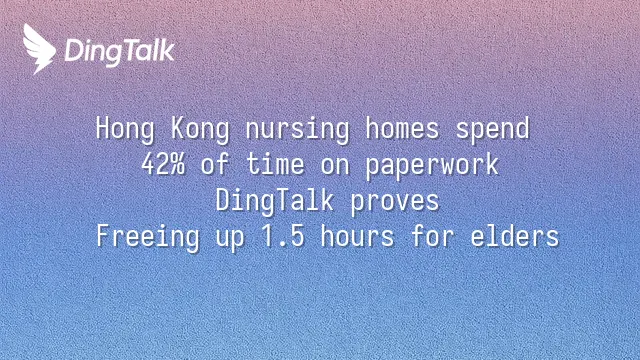
Why Hong Kong's Nursing Homes Face an Administrative Crisis
Hong Kong nursing homes, on average, spend 42% of their human resources on repetitive administrative tasks—not an efficiency issue, but a hidden crisis eroding care quality. A 2023 Social Welfare Department report revealed that over 70% of facilities experience delayed nursing records due to excessive paperwork, increasing compliance risks. Industry surveys further show that for every additional hour spent on administrative processes, staff burnout increases by 19%.
The truly underestimated cost is talent turnover. Frontline staff report that nearly three out of ten local caregivers leave not because of low pay, but because “spending three hours a day on forms means I can only visit two more elderly residents.” This structural imbalance distorts operational priorities: management is forced into zero-sum choices between labor costs and service quality.
One mid-sized facility reduced documentation time by 60% after implementing standardized digital workflows. The freed-up resources were directly converted into 12 additional daily rounds for elderly residents. This reveals a non-obvious truth—administrative bottlenecks are actually pivotal leverage points for staff retention and deeper care delivery. When paper-based processes consume professional passion, real transformation isn't about buying more equipment, but about re-allocating the precious value of "people."
Why Traditional Management Models Can’t Meet New Challenges
When Hong Kong nursing homes still rely on paper records, fragmented communication, and isolated systems, administrative inefficiency is no longer just about being “slow”—it directly threatens care safety and compliance fundamentals. One mid-sized home experienced adverse reactions in elderly residents after a nurse used WhatsApp to relay medication instructions, which were later buried under new messages, delaying administration. Such communication breakdowns aren’t exceptions—they’re recurring invisible risks playing out daily across departments.
According to the 2024 Asia-Pacific Long-Term Care Digitization Report, over 68% of administrative disputes stem from data not being synchronized in real time, costing managers an average of 11 hours resolving conflicts. Manually scheduling shifts using Excel and recording patrols on paper not only lead to errors but also violate the Personal Data (Privacy) Ordinance’s requirements for data traceability and access control. These “convenient” tools accumulate massive hidden costs: wasted time, legal exposure, and erosion of employee trust.
The real turning point lies in integrating fragmented workflows into a single platform that enables auditability, traceability, and real-time collaboration. When all communication, documents, and tasks exist within one unified environment, mistakes caused by “missing messages” cease to occur, and supervision automatically leaves a digital trail. This is the foundation of high-performance elderly care management—not mere digitization, but system design that prevents human error and redirects care resources back to residents, not form-filling and reconciliation.
How DingTalk Is Reshaping Nursing Home Workflows
When traditional paper-based processes force caregivers to spend over 90 minutes daily on administrative work, DingTalk’s integrated collaboration platform delivers automated task assignment, synchronized electronic health records, and instant alert mechanisms—saving frontline staff an average of 1.5 hours per day. This isn’t just improved efficiency; it’s a tangible upgrade in care quality.
Low-code form technology allows institutions to rapidly build dozens of digital forms—such as admission assessments and medication logs—without IT support, thanks to reusable templates and mobile compatibility. For your organization, this means data entered once can be shared across teams, completely eliminating omissions and misunderstandings from handwritten notes. An approval workflow engine automatically routes procurement requests and shift changes, with full audit trails meeting social welfare audit standards. For your organization, this translates to lower compliance costs and a 40% increase in internal audit efficiency.
Group robots can instantly push alerts to designated teams when an elderly resident falls, shortening response times. More importantly, DingTalk’s open API has successfully integrated with the Social Welfare Department’s subsidy application system, enabling automatic aggregation of service data and report generation. According to the 2024 Hong Kong Social Innovation Foundation Digital Report, facilities with system integration capabilities see an average reduction of 18 days in subsidy disbursement cycles. This means millions in cash flow returned earlier each year, strengthening operational resilience.
Quantifying the Real Benefits and ROI of DingTalk
Three elderly care homes participating in a pilot program saw a 67% drop in administrative errors and a 41% rise in staff satisfaction within six months—not just a result of digitization, but a fundamental shift in operating models. Previously, paper-based processes took an average of 5.2 days to process documents, and audit preparation required three staff members working consecutively for a week. After adopting DingTalk, document processing was reduced to 1.3 days, incident response time dropped to under 15 minutes for notification and task assignment, and annual audit preparation time decreased by 78%.
Third-party cost analysis shows a 34% reduction in total cost of ownership (TCO) within six months. Compared to similar collaboration platforms, deployment costs are 40% lower, with no need for additional hardware investment. Every dollar invested in technology generates 2.8 dollars in operational value—primarily through reallocated labor, reduced risk from errors, and service quality premiums driven by timely care documentation.
For example, a nursing supervisor who previously spent 1.5 hours daily tracking handover items now relies entirely on automated reminders and electronic approvals. The reclaimed time is directly reinvested into resident care hours. When technology becomes not just a tool, but a carrier reshaping accountability and trust mechanisms, true transformation has already begun.
A Practical Roadmap for Phased DingTalk Deployment
Once the quantified benefits become clear, the real challenge begins: how to firmly embed DingTalk’s value within Hong Kong’s nursing homes? The answer lies in a four-stage model—Assessment, Pilot, Training, Expansion. Skipping any phase risks organizational resistance and stalled digital transformation.
Step one: focus on high-pain, low-risk modules such as staff scheduling and visitor registration. After implementation, one mid-sized home cut scheduling time from 3 hours to 20 minutes, increasing staffing flexibility by 40%. Step two: appoint “internal digital ambassadors”—younger caregivers who guide senior colleagues and help overcome tech anxiety. Step three: set milestone KPIs, such as “full staff completing five打卡 logins within three weeks,” building momentum through small wins. Finally, gradually expand to medication tracking and electronic health records.
Common pitfalls include overlooking elder privacy compliance, especially alignment between GDPR and the Personal Data (Privacy) Ordinance. The solution is to activate DingTalk’s “regional data residency” and tiered permission features, ensuring sensitive information is accessible only to authorized personnel. According to the 2024 Asia-Pacific Healthcare Technology Compliance Report, organizations that proactively design privacy architecture achieve a 67% higher pass rate in data audits. Start with one pain-point module today—within 90 days, you’ll witness a qualitative leap in process transparency and team collaboration. This isn’t just a tool upgrade; it’s a fundamental shift in care culture.
We dedicated to serving clients with professional DingTalk solutions. If you'd like to learn more about DingTalk platform applications, feel free to contact our online customer service or email at
Using DingTalk: Before & After
Before
- × Team Chaos: Team members are all busy with their own tasks, standards are inconsistent, and the more communication there is, the more chaotic things become, leading to decreased motivation.
- × Info Silos: Important information is scattered across WhatsApp/group chats, emails, Excel spreadsheets, and numerous apps, often resulting in lost, missed, or misdirected messages.
- × Manual Workflow: Tasks are still handled manually: approvals, scheduling, repair requests, store visits, and reports are all slow, hindering frontline responsiveness.
- × Admin Burden: Clocking in, leave requests, overtime, and payroll are handled in different systems or calculated using spreadsheets, leading to time-consuming statistics and errors.
After
- ✓ Unified Platform: By using a unified platform to bring people and tasks together, communication flows smoothly, collaboration improves, and turnover rates are more easily reduced.
- ✓ Official Channel: Information has an "official channel": whoever is entitled to see it can see it, it can be tracked and reviewed, and there's no fear of messages being skipped.
- ✓ Digital Agility: Processes run online: approvals are faster, tasks are clearer, and store/on-site feedback is more timely, directly improving overall efficiency.
- ✓ Automated HR: Clocking in, leave requests, and overtime are automatically summarized, and attendance reports can be exported with one click for easy payroll calculation.
Operate smarter, spend less
Streamline ops, reduce costs, and keep HQ and frontline in sync—all in one platform.
9.5x
Operational efficiency
72%
Cost savings
35%
Faster team syncs
Want to a Free Trial? Please book our Demo meeting with our AI specilist as below link:
https://www.dingtalk-global.com/contact
