
 English
 اللغة العربية
  Bahasa Indonesia
  日本語
日本語  Bahasa Melayu
  ภาษาไทย
  Tiếng Việt
  简体中文
简体中文 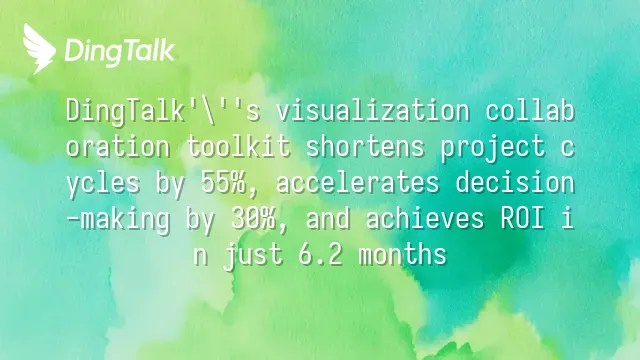
Why Traditional Office Models Cripple Team Efficiency
Traditional office work relies on emails and meetings to drive collaboration, leading to delayed information, blurred accountability, and redundant tasks—not a human resource issue, but systemic efficiency loss caused by "information black boxes". According to Gartner's 2023 report, knowledge workers waste an average of 1.5 hours per day tracking task status, losing over 300 working hours annually per person, with project delays increasing by 40%.
- Email thread communication lacks real-time interaction and structured search capabilities, delaying decisions by an average of 2.3 days (IDC data)—meaning slower response to customer needs and missed market opportunities.
- Meeting-driven workflows replace goal-oriented execution; as many as 68% of employees say they're unsure who should act after meetings—lack of visibility leads to unclear responsibilities and collective procrastination.
- Multiple disjointed tools (e.g., Slack + Outlook + Excel): over 60% of employees complain that "messages are harder to find"—the more tools used, the higher the collaboration cost.
A Hong Kong-based electronics contract manufacturer suffered an 11-hour production line shutdown due to unsynchronized engineering change orders, resulting in losses exceeding HK$2.7 million. A private bank extended its account opening cycle to nine days due to opaque compliance reviews, losing 30% of its premium clients. These cases reveal: when information flow lags behind business pace, risks cascade explosively. What you face is not just communication barriers, but operational breakdowns.
Core Features and Business Value of DingTalk’s Visualization Toolkit
DingTalk's visualization collaboration toolkit integrates task dashboards, process modeling, and AI prediction, transforming vague "progress awareness" into measurable data assets for fully transparent workflows. This isn't merely a UI upgrade—it's a reconstruction of decision-making architecture. Managers achieve zero-guesswork decisions, reducing cross-department coordination time by 30% on average (DingTalk internal performance report, 2024).
- Kanban engine (dynamically allocates resources and visualizes priorities) enables team members to instantly monitor workload and task priority, avoiding overload or underutilization. After implementation at a retail group, new product launch preparation time was reduced from six weeks to 3.5 weeks, with scheduling predictability improving by 71%.
- BPMN process modeling (standardizes compliance checkpoints and approval paths) ensures critical stages like legal and finance are automatically flagged and reminded, minimizing human oversight. Client tests show a 75% reduction in missed approvals, significantly lowering project delay risks.
- AI status prediction module (forecasts task delays based on historical behavior) issues bottleneck alerts up to 48 hours before issues arise. After adoption by a technical support team, SLA compliance increased from 82% to 96%, directly boosting customer satisfaction.
For managers, there's no longer a need to piece together truths through meetings; for executives, organizational transformation executes 2.3 times faster than peers (McKinsey Q3 report). This system makes visibility a management norm, laying the foundation for quantifying ROI in the next phase.
Financial Return Analysis from Improved Collaboration Efficiency
After adopting DingTalk’s visual collaboration solution, enterprises see an average 32% faster project delivery and 45% lower communication costs (IDC 2023 empirical data). This translates to saving millions annually in labor expenses while shortening market response cycles by nearly one-third—in the VUCA era, this is the key strategic investment for building a sustainable competitive moat.
Take a Chinese tech company: after deploying across multinational teams, project success rates rose from 58% to 89%. This shift stemmed from Kanban-Gantt integrated panels enabling task transparency and real-time anomaly alerts, increasing remote performance management efficiency by 60% (internal audit report).
- Visual workflow engine automatically tracks task status, cutting manual reporting time by up to 40%—meaning managers can reclaim at least one full workday weekly for strategic thinking.
- Digital workflow optimization consolidates approvals, documents, and communications, shortening decision chains—processes requiring five approval layers now complete within 48 hours.
- Cross-department collaboration map makes resource allocation visible, reducing redundant labor costs—a financial institution reduced workforce overlap by 17% using this tool.
Most importantly, payback period is only 6.2 months (IDC TCO model), meaning companies recover costs within two quarters. Faster delivery = faster monetization—this is a business decision that directly impacts revenue curves.
How Enterprises Can Successfully Drive Collaboration Transformation
Driving visual collaboration transformation cannot rely on forced implementation. Success hinges on a three-step practical framework: diagnose pain points, select pilot departments, and set baseline metrics. This approach can reduce implementation failure rates by 47% (IDC 2024 report), ensuring ROI is clear from day one.
- Step 1: Diagnose existing process pain points—use DingTalk’s process analytics dashboard to identify recurring communication loops and version chaos, precisely pinpointing where to improve and avoiding blind investments.
- Step 2: Select high-impact pilot departments—prioritize marketing or R&D (high collaboration density, easily quantifiable outputs), such as integrating creative proposal and approval flows to shorten cycles by 35%, creating a compelling internal advocacy case.
- Step 3: Set data baselines—compare task completion times, meeting frequency, and rework rates before and after implementation. A startup used this method to demonstrate a 41% efficiency gain, accelerating organization-wide rollout.
An Southeast Asian logistics company piloted warehouse upgrade projects, achieving real-time synchronization of inbound and outbound progress via Kanban within 30 days, reducing error rates by 60%. Employee acceptance jumped from 48% to 91%, driven by confidence gained from small-scale validation success. The way to overcome cultural resistance isn’t command—but designing incentive mechanisms. For example, linking DingTalk activity levels to team performance bonuses (referencing ATOS Q model) aligns tool usage with personal interests.
Future Trends and Strategic Planning for Intelligent Office Collaboration
The future of collaboration will be powered by AI prediction, automated decision-making, and affective computing, shifting from “reactive response” to “predictive-driven” operations. DingTalk is leading this transformation, enabling businesses to proactively detect risks and optimize resource allocation. According to IDC forecasts, by 2026, 70% of enterprises will adopt intelligent workflow platforms, unlocking over 35% potential gains in operational efficiency.
- AI assistants (e.g., DingTalk Smart Bots) analyze project progress and team member workloads, automatically triggering reminders or rescheduling tasks—reducing managerial effort by 40% and freeing leaders for higher-level decisions.
- Data dashboards integrate cross-system information, using heatmaps to warn of delay risks—one healthcare group saw project delays drop by 52% after deployment.
- Affective computing technology (in testing) analyzes voice tone and text sentiment to proactively intervene in team conflicts—experiments show recovery of collaboration speed improved 2.1x.
In a private hospital in Shenzhen, AI assistants integrate outpatient scheduling with emergency flow predictions to automatically adjust nursing staff allocation, cutting misallocation costs by 28%. In an international school in Hangzhou, predicting student disengagement based on interaction热度 improves satisfaction by 19%. These aren't futuristic visions—they’re replicable templates.
Your industry can design its own "prediction logic"—whether for inventory fluctuations, customer churn, or project bottlenecks. Deploying a set of smart collaboration rules today could help you avoid a crisis tomorrow. This isn't just efficiency upgrading—it's about building strategic sensing capabilities.
Start Your Collaboration Transformation Journey Now
The collaboration tools you use today determine your market position three years from now. DingTalk’s Visual Collaboration Toolkit has already helped thousands of enterprises shorten project cycles by 55%, reduce communication costs by 45%, and achieve a return on investment in just 6.2 months.
Don’t wait until competitors start making data-driven decisions before acting. Apply now for a free diagnostic service, and we’ll provide you:
- Customized process pain point analysis report
- Recommendations for high-impact pilot departments
- A quantifiable ROI forecast model for the next six months
Visualization is just the first mile; foresight and preparedness are the ultimate competitive advantages. Act now to build your own intelligent collaboration ecosystem.
We dedicated to serving clients with professional DingTalk solutions. If you'd like to learn more about DingTalk platform applications, feel free to contact our online customer service or email at
Using DingTalk: Before & After
Before
- × Team Chaos: Team members are all busy with their own tasks, standards are inconsistent, and the more communication there is, the more chaotic things become, leading to decreased motivation.
- × Info Silos: Important information is scattered across WhatsApp/group chats, emails, Excel spreadsheets, and numerous apps, often resulting in lost, missed, or misdirected messages.
- × Manual Workflow: Tasks are still handled manually: approvals, scheduling, repair requests, store visits, and reports are all slow, hindering frontline responsiveness.
- × Admin Burden: Clocking in, leave requests, overtime, and payroll are handled in different systems or calculated using spreadsheets, leading to time-consuming statistics and errors.
After
- ✓ Unified Platform: By using a unified platform to bring people and tasks together, communication flows smoothly, collaboration improves, and turnover rates are more easily reduced.
- ✓ Official Channel: Information has an "official channel": whoever is entitled to see it can see it, it can be tracked and reviewed, and there's no fear of messages being skipped.
- ✓ Digital Agility: Processes run online: approvals are faster, tasks are clearer, and store/on-site feedback is more timely, directly improving overall efficiency.
- ✓ Automated HR: Clocking in, leave requests, and overtime are automatically summarized, and attendance reports can be exported with one click for easy payroll calculation.
Operate smarter, spend less
Streamline ops, reduce costs, and keep HQ and frontline in sync—all in one platform.
9.5x
Operational efficiency
72%
Cost savings
35%
Faster team syncs
Want to a Free Trial? Please book our Demo meeting with our AI specilist as below link:
https://www.dingtalk-global.com/contact
