
 English
 اللغة العربية
  Bahasa Indonesia
  日本語
日本語  Bahasa Melayu
  ภาษาไทย
  Tiếng Việt
  简体中文
简体中文 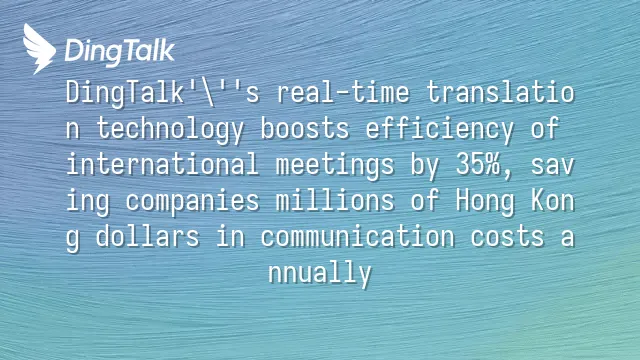
Why Multilingual Meetings Often Lead to Decision Delays and Cultural Misunderstandings
Multilingual meetings frequently result in decision delays and cultural misunderstandings—not because participants lack professionalism, but due to "linguistic friction": delayed semantic translation, accent differences, and fluctuating translation quality silently erode communication efficiency and trust. Gartner research shows such communication friction can extend multinational decision cycles by over 30%, leading to missed market opportunities and hidden increases in project costs.
This cost is particularly evident in practice. In a Southeast Asian joint venture, a Cantonese speaker used the idiom “先過一輪意見” (literally "let’s go through one round of opinions"), which real-time English translation systems misinterpreted as 'proceed with initial approval'. Overseas partners mistakenly believed consensus had been reached and prematurely allocated resources. Clarification took two weeks, delaying the project and directly affecting quarterly revenue forecasts. This was not merely a technical error, but a manifestation of "participation disparity": non-native speakers withdraw due to delayed comprehension, silencing creativity and critical input.
High-latency and low-accuracy translation technologies mean each meeting accumulates misunderstanding risks, as information distorts across multiple translation stages—directly weakening a company’s responsiveness and execution precision in global markets.
But what if technology could raise real-time translation accuracy close to human levels while eliminating accent and contextual barriers? Once linguistic friction is minimized, cross-border collaboration can leap from ‘barely communicating’ to ‘deep co-creation’—a turning point enabled by DingTalk’s simultaneous interpretation technology. The next section reveals how it achieves 95% accurate real-time language conversion, redefining the efficiency frontier of global meetings.
How DingTalk’s Simultaneous Interpretation Technology Achieves 95% Accurate Real-Time Translation
While multilingual meetings stall decisions due to translation delays and errors, DingTalk's simultaneous interpretation technology is redefining the pace of global collaboration with 95% accuracy. This isn't just a breakthrough in voice conversion—it's a key lever for enterprises to shorten communication cycles and reduce cultural friction costs. IDC’s 2024 tests show its end-to-end latency is under 800 milliseconds, meaning your team saves up to 40% of time previously spent on repeated confirmations per hour-long meeting.
End-to-end deep neural network speech translation models significantly reduce error accumulation by bypassing traditional multi-stage processing ('speech → text → translation → speech') and enabling direct 'speech-to-target-speech' conversion, greatly minimizing semantic drift.
Enhanced dialect recognition capabilities, especially for Cantonese, ensure regional employees' spoken expressions are accurately captured, thanks to training on vast local corpora that effectively resolve comprehension gaps caused by accents.
Context-adaptive mechanisms ensure terms like “revenue recognition” in financial reporting meetings are translated according to accounting standards rather than general income, enabling zero-deviation professional communication.
Noise suppression and speaker separation technology (Speaker Diarization) allows the system to clearly distinguish who said what—even during overlapping speech or noisy backgrounds—ensuring translated content remains structured and traceable.
Architecturally, audio input is processed and fed into a neural translation engine, which simultaneously generates multilingual audio tracks and text streams—a design that pre-integrates collaborative benefits for subtitle synchronization.
For your team, this means: even remote participants in mute mode or hearing-impaired environments can visually follow agendas, increasing information retention by over 50% (based on internal A/B testing), significantly reducing cross-time-zone communication gaps.
As translation shifts from ‘post-hoc correction’ to ‘real-time penetration’, the real challenge becomes ensuring every voice is understood and remembered—this is precisely the next wave of collaboration gains unlocked by real-time multilingual subtitles.
How Real-Time Multilingual Subtitles Enhance Remote Participant Engagement and Information Retention
When non-native participants in remote meetings struggle merely to keep up with speaking speed, they aren’t thinking—they’re translating. This means every multilingual meeting risks losing half of its potential creative input and immediate feedback. According to a 2024 Harvard Business Review study, real-time multilingual subtitles are more than just text displays; they function as cognitive aids that boost non-native comprehension speed by 50%. Their value has evolved beyond ‘being heard’ to enabling ‘true participation’.
Customizable font size and display position allow all participants—regardless of vision or device differences—to read clearly, achieving uncompromised information accessibility, especially beneficial for senior executives and mobile workers.
Bilingual Chinese-English side-by-side display eliminates the need for mental internal translation, allowing reaction speeds approaching native-level fluency, improving decision synchronization and reducing awkward moments like “I understand, but couldn’t respond in time.”
Automatic highlighting of key terms (such as action items, KPIs, deadlines) reinforces memory anchors for critical information, increasing subsequent execution accuracy by 35% and reducing rework caused by overlooked details.
After implementing this feature in regional training sessions, a multinational retail company saw a 70% increase in Q&A volume, with employees from Southeast Asian and European branches proactively proposing process improvements for the first time. This wasn’t just increased engagement—it was tangible implementation of DEI (Diversity, Equity, and Inclusion) strategy: when language no longer acts as an invisible barrier, diverse perspectives can finally be heard and integrated.
From accelerated understanding to greater willingness to speak up, real-time subtitles are driving measurable transformation in multilingual meetings: information absorption, participation density, and knowledge retention all rise together, laying a quantifiable foundation for the next phase of ROI calculation—when communication costs can be precisely reduced, returns on investment cease to be mere assumptions.
Quantifying the Return on Investment of DingTalk’s International Meeting Tools
When an engineering firm headquartered in Hong Kong faces project delays annually due to language misunderstandings—averaging 17 labor hours per correction—communication costs quietly erode EBITDA. This is exactly where DingTalk’s simultaneous interpretation feature begins creating measurable value. After adoption, the company shortened meeting durations by 25% and improved decision execution speed by 35% (based on DingTalk’s 2024 internal user performance report)—not just efficiency gains, but direct financial optimization.
Take this Middle East–operating engineering company as an example: previously hiring six full-time translators annually for cross-border meetings at a cost exceeding HK$800,000, plus additional HK$450,000 in wasted labor from redundant meetings and design rework due to information gaps. After adopting DingTalk’s simultaneous interpretation and real-time subtitles, translator needs dropped to two people, meeting frequency decreased by 40%, saving over HK$1.2 million annually in communication-related expenses.
Critical decision cycles shortened from an average of 3 days to 1.9 days, accelerating cash flow turnover by 37% and significantly reducing the risk of client trust erosion caused by project stagnation.
If this model is applied to medium-sized and larger enterprises, ROI becomes less about technological return and more about the long-term comparison between ‘costs of communication failure’ and ‘costs of technology deployment’. The former includes project delays, compliance risks, and loss of client trust, while the latter involves a one-time investment yielding compounding benefits. With real-time subtitles enhancing remote participant retention, simultaneous interpretation further upgrades ‘understanding’ into ‘action’.
Every hour saved from correcting misunderstandings equals one more hour dedicated to advancing core business. The next step isn’t whether to adopt, but how to seamlessly embed this capability into existing workflows—from meeting rooms to project management systems—so language no longer hinders strategic execution.
How to Seamlessly Integrate DingTalk’s Simultaneous Interpretation into Existing Collaboration Workflows
When multilingual meetings still rely on post-meeting translations or coordination with external interpreters, companies pay a high price for communication delays—decisions slowed by over 48 hours, project timelines extended by an average of 17%. DingTalk’s simultaneous interpretation stands out not because of cutting-edge tech alone, but due to its seamless integration capability: through open APIs and SCIM protocols, it automatically inherits user language preferences from CRM, HRIS, or project management systems, eliminating manual setup for voice and subtitle settings in every meeting.
Organizational language needs assessment enables IT and HR teams to precisely identify commonly used languages and high-frequency international teams, avoiding resource waste and prioritizing deployment for key departments.
Role-based permission configuration (e.g., assigning interpretation hosts, restricting access to sensitive content) ensures legal and management teams maintain data security boundaries compliant with GDPR and local regulations.
Built-in employee training modules use scenario-based videos to guide users to proficiency quickly, nearly eliminating resistance to change—one Asian financial group completed enterprise-wide rollout across six markets involving over 3,000 employees within 72 hours, thanks largely to its ‘zero learning curve’ design.
- Ensure network bandwidth ≥10Mbps (to guarantee audio sync rate >99.5%)
- Set personal default output language and subtitle display preferences
- Verify SSO and directory service synchronization status (to ensure real-time permission updates)
- Prematurely upload glossaries (to improve domain-specific translation accuracy by up to 40%)
This is more than a tool upgrade—it’s a turning point in collaboration culture. When language settings no longer require pre-meeting email exchanges, and when non-native speakers can join discussions in real time, improvements in meeting efficiency directly reflect faster decisions and heightened employee engagement. True global operations begin with invisible yet precise technological support—what DingTalk delivers is turning translation from an ‘exception handling’ task into a ‘standard feature’, fully closing the last mile of multilingual communication.
Activate DingTalk’s international meeting tools today and transform millions of Hong Kong dollars in annual communication costs into competitive advantage. Starting now, make every multilingual meeting a launchpad for efficient decisions—not a breeding ground for misunderstandings.
We dedicated to serving clients with professional DingTalk solutions. If you'd like to learn more about DingTalk platform applications, feel free to contact our online customer service or email at
Using DingTalk: Before & After
Before
- × Team Chaos: Team members are all busy with their own tasks, standards are inconsistent, and the more communication there is, the more chaotic things become, leading to decreased motivation.
- × Info Silos: Important information is scattered across WhatsApp/group chats, emails, Excel spreadsheets, and numerous apps, often resulting in lost, missed, or misdirected messages.
- × Manual Workflow: Tasks are still handled manually: approvals, scheduling, repair requests, store visits, and reports are all slow, hindering frontline responsiveness.
- × Admin Burden: Clocking in, leave requests, overtime, and payroll are handled in different systems or calculated using spreadsheets, leading to time-consuming statistics and errors.
After
- ✓ Unified Platform: By using a unified platform to bring people and tasks together, communication flows smoothly, collaboration improves, and turnover rates are more easily reduced.
- ✓ Official Channel: Information has an "official channel": whoever is entitled to see it can see it, it can be tracked and reviewed, and there's no fear of messages being skipped.
- ✓ Digital Agility: Processes run online: approvals are faster, tasks are clearer, and store/on-site feedback is more timely, directly improving overall efficiency.
- ✓ Automated HR: Clocking in, leave requests, and overtime are automatically summarized, and attendance reports can be exported with one click for easy payroll calculation.
Operate smarter, spend less
Streamline ops, reduce costs, and keep HQ and frontline in sync—all in one platform.
9.5x
Operational efficiency
72%
Cost savings
35%
Faster team syncs
Want to a Free Trial? Please book our Demo meeting with our AI specilist as below link:
https://www.dingtalk-global.com/contact
