
 English
 اللغة العربية
  Bahasa Indonesia
  Bahasa Melayu
  ภาษาไทย
  Tiếng Việt
  简体中文
简体中文 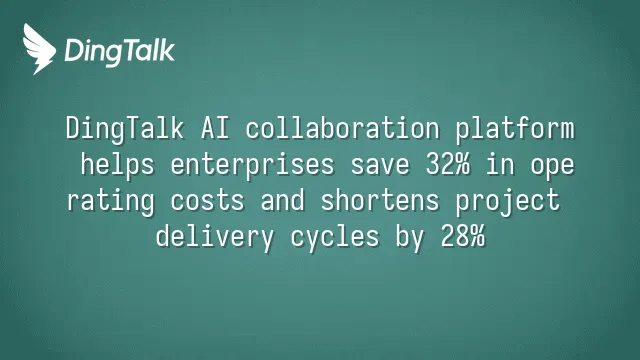
Why Traditional Office Software Hinders Business Growth
Traditional office software separates communication, tasks, and business processes, causing employees to waste an average of 2.1 hours per day on data transfer and repeated confirmations—meaning over 50,000 working hours are lost annually for every 100 knowledge workers. For you, this is not just an efficiency issue, but also a hidden cost of millions each year.
An international retail chain once took up to 14 days to launch new products because the marketing team couldn’t access real-time inventory data. After adopting an integrated collaboration platform with cross-system data integration, inventory, sales, and staffing information were synchronized instantly. Decision-making time was reduced by 60%, and project cycles dropped to just 5.6 days. The value for you? Faster market responsiveness means capturing golden sales windows.
- Communication stays connected to tasks: Discussions automatically convert into actionable items, eliminating omissions and redundant follow-ups
- Approval workflows auto-trigger: Reduces manual tracking and waiting, increasing process transparency by 70%
- Cross-system data integration: Breaks down silos, enabling decisions based on real-time data instead of assumptions
This matters because every hour saved from collaboration inefficiency unlocks more potential for value creation. As communication costs drop, teams can focus on improving customer experience and driving innovation rather than constantly patching gaps.
How DingTalk Builds an Enterprise-Grade Intelligent Collaboration Foundation
DingTalk has evolved beyond a simple messaging tool. With its three core capabilities—unified message center, embedded application architecture, and low-code development environment—it forms an enterprise-grade collaboration infrastructure. For you, this means: you can deploy a customized business management system within 72 hours without additional IT resources, turning automation that once took weeks into reality.
The unified message center consolidates all pending tasks, notifications, and approvals in one place, preventing missed messages—since 93% of delays stem from information not reaching stakeholders in time (IDC, 2024). Combined with the AI assistant “Ding Xiao Mi,” which detects anomalies and sends automatic alerts, financial approval processing time is shortened by 40%. More importantly, the Yida low-code platform enables regional managers to design their own expense rules and audit logic, while IT only reviews before going live—reducing development workload by 60%.
A cross-border retail company used DingTalk’s built-in workflows to integrate 14 separate steps into a single end-to-end visual dashboard, boosting interdepartmental collaboration efficiency by 30%. This isn't just an upgrade in tools—it's a compression of decision-making rhythm. Response plans can now be triggered within two hours of identifying an issue.
The essence of organizational agility is transforming reaction time into competitive advantage. When a collaboration platform can absorb business changes in real time and automatically adjust the entire execution chain, the enterprise gains dynamic adaptability to market shifts.
How AI Digital Employees Reimagine Human Value
While companies still spend 30% of knowledge workers’ time on meeting notes and task tracking, DingTalk’s multimodal AI agent technology equips every team with virtual assistants capable of taking action. Internal testing at Alibaba showed that after implementing AI-powered meeting summaries and automated task assignment, time spent compiling meeting outputs decreased by 75%, freeing over 600 high-value work hours annually for a mid-sized team.
AI no longer simply responds to commands; it understands speech, identifies decision points, and proactively executes follow-up actions. For example, after a meeting ends, DingTalk AI instantly generates structured minutes, highlights responsible parties and deadlines, and syncs them to calendars and project dashboards. A retail executive noted: “A process that used to take two hours now takes 10 minutes. Management can immediately focus on inventory allocation and promotional strategies.”
For you, this means shifting human ROI from “cost reduction” to “amplifying intellectual leverage.” Senior staff are freed from administrative loops and can concentrate on customer insights and innovative design—this marks the turning point where digital transformation evolves from “efficiency fixes” to “capability upgrades.”
When AI agents become standard equipment, the real competitive gap lies in who can faster convert liberated cognitive energy into momentum for business innovation.
Real ROI Case Study: From Cost Savings to Operational Upgrade
A leading manufacturer achieved a 32% reduction in collaboration costs and a 28% shorter project delivery cycle within two years. The driver? An efficiency-driven operational revolution. Third-party audits revealed that every RMB 1 invested in IT budget generated RMB 2.6 in actual operational returns—not an expense, but reinvestment in competitive advantage.
Cost reductions came from three key shifts: travel frequency dropped 45% due to widespread use of DingTalk video conferencing and remote approvals; digitizing paper-based processes cut interdepartmental sign-offs from 3.2 days to just 4 hours; and real-time synchronization between remote R&D and production teams boosted collaboration efficiency by over 40%. These compounding effects didn’t just save money—they reshaped decision rhythms and strengthened organizational resilience.
The lesson for you: evaluating collaboration tools shouldn’t be limited to license fees. True ROI lies in “time cost conversion” and “elimination of hidden friction.” When information flows faster, problem-solving stays ahead of crises.
Digital collaboration has evolved from a support function to a strategic engine, moving enterprises from reactive responses to proactive control.
Four-Stage Implementation Strategy for Maximum Impact
If enterprises treat DingTalk merely as a communication tool, they miss over 80% of its digital transformation potential. Real impact comes from a systematic four-stage leap: scenario diagnosis → module deployment → data integration → AI deepening. This path ensures technology investments precisely address organizational pain points, minimizing cultural resistance and resource waste.
Scenario diagnosis starts by identifying high-frequency, cross-departmental, or paperwork-heavy processes—like attendance or procurement approvals. A Hong Kong retailer began with 200 daily shift scheduling requests. Using the “smart approval” module, they launched within three weeks, cutting approval cycles from 48 hours to just 4 hours, freeing up 35% of managerial effort (Asia-Pacific Enterprise Process Efficiency Report, 2024).
At the data integration stage, DingTalk becomes a decision hub. After integrating HR and project data, managers can track deviations between “labor input vs. output progress” in real time and intervene early. In the AI deepening phase, AI assistants automatically summarize meetings, create to-do lists, and sync across platforms, saving knowledge workers about 6 hours weekly on repetitive tasks (IDC 2025 forecast).
Measuring success should focus on five KPIs:
- Reduction rate in process cycle times (e.g., reimbursement, onboarding)
- Interdepartmental collaboration response speed
- Percentage of tasks completed via mobile devices
- Real-time data availability rate across systems
- Employee satisfaction with digital tools (eNPS)
These metrics directly address pain points like fragmented communication and delayed decisions, creating a closed-loop validation—technology change ultimately exists to unleash human creativity, not add operational burden.
Next Step: Unlock Cognitive Energy to Drive Business Innovation
As DingTalk integrates deeply with Alibaba Cloud and Tongyi large models, enterprises move beyond efficiency gains toward business model innovation. For instance, AI can predict resource bottlenecks based on historical project data and automatically suggest schedule adjustments—or analyze customer conversation audio to instantly recommend personalized service strategies for frontline staff.
The value for you is clear: shifting from saving time to generating revenue. The human capital and data assets you’ve already unlocked are the starting point for your next growth curve.
Start your four-stage assessment today—identify your first high-frequency pain-point process and witness an 80% improvement in approval efficiency within three weeks. DingTalk is more than a tool; it’s the catalyst for your organization’s evolution.
We dedicated to serving clients with professional DingTalk solutions. If you'd like to learn more about DingTalk platform applications, feel free to contact our online customer service or email at
Using DingTalk: Before & After
Before
- × Team Chaos: Team members are all busy with their own tasks, standards are inconsistent, and the more communication there is, the more chaotic things become, leading to decreased motivation.
- × Info Silos: Important information is scattered across WhatsApp/group chats, emails, Excel spreadsheets, and numerous apps, often resulting in lost, missed, or misdirected messages.
- × Manual Workflow: Tasks are still handled manually: approvals, scheduling, repair requests, store visits, and reports are all slow, hindering frontline responsiveness.
- × Admin Burden: Clocking in, leave requests, overtime, and payroll are handled in different systems or calculated using spreadsheets, leading to time-consuming statistics and errors.
After
- ✓ Unified Platform: By using a unified platform to bring people and tasks together, communication flows smoothly, collaboration improves, and turnover rates are more easily reduced.
- ✓ Official Channel: Information has an "official channel": whoever is entitled to see it can see it, it can be tracked and reviewed, and there's no fear of messages being skipped.
- ✓ Digital Agility: Processes run online: approvals are faster, tasks are clearer, and store/on-site feedback is more timely, directly improving overall efficiency.
- ✓ Automated HR: Clocking in, leave requests, and overtime are automatically summarized, and attendance reports can be exported with one click for easy payroll calculation.
Operate smarter, spend less
Streamline ops, reduce costs, and keep HQ and frontline in sync—all in one platform.
9.5x
Operational efficiency
72%
Cost savings
35%
Faster team syncs
Want to a Free Trial? Please book our Demo meeting with our AI specilist as below link:
https://www.dingtalk-global.com/contact
